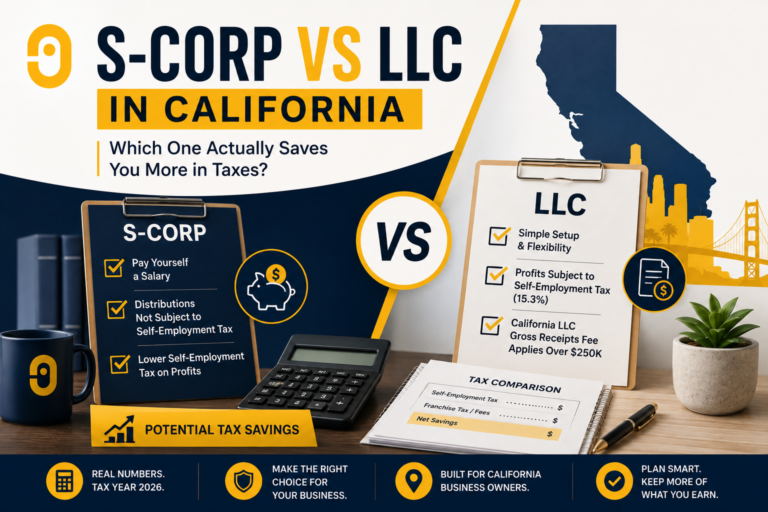




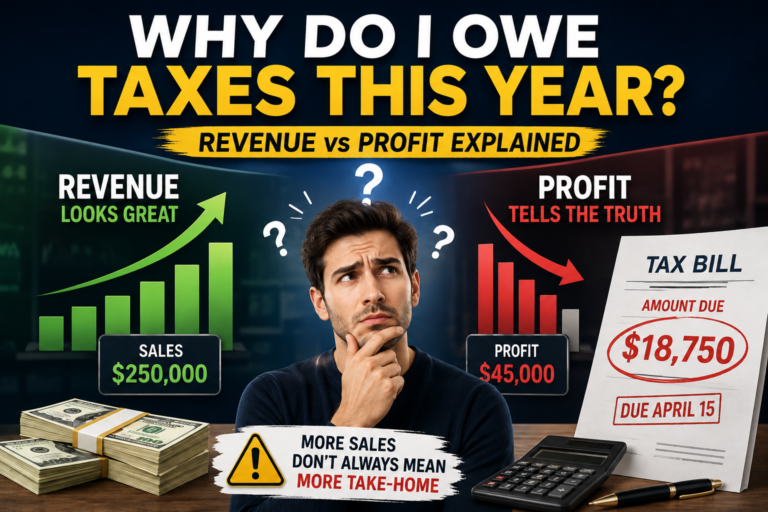
S-Corp vs LLC in California: which one saves you more in taxes
How each structure is taxed in California, and when an S corp election starts to pay off.
Resources
Deadlines, guides and plain answers for running the financial side of a business in California. Written by the people who do this work every day, kept current, and free whether or not you ever become a client.
Entity choice, registration, and what’s cheaper to set up right than to fix later.
What catching up involves and how to stop it recurring.
What changes the day someone goes on the books in California.
What to gather and what to decide before year end.
The dates that catch people out. Federal and California.
The full tax calendarEvery federal and California date, month by monthOpen the calendar| What | Who it applies to | Date |
|---|---|---|
| Quarterly estimated tax, Q1 | Self-employed and pass-through owners | April 15 |
| Quarterly estimated tax, Q2 | Self-employed and pass-through owners | June 15 |
| Quarterly estimated tax, Q3 | Self-employed and pass-through owners | September 15 (federal only) |
| Quarterly estimated tax, Q4 | Self-employed and pass-through owners | January 15 of the next year |
| W-2s to employees | Anyone with employees | January 31 |
| 1099-NEC to contractors | Anyone paying contractors | January 31 |
| Partnership and S-corp returns | 1065 and 1120S filers | March 15 |
| C-corp and individual returns | 1120 and 1040 filers | April 15 |
| California Statement of Information | Corporations and LLCs | By the end of your registration month: every year for corporations, every two years for LLCs |
Last reviewed October 2026. Dates move when they fall on a weekend or holiday. If one of these matters to you, check the calendar or ask us.
See the full tax calendarThree pieces worth reading first.
How each structure is taxed in California, and when an S corp election starts to pay off.
What California requires employers to give, track and show on every paycheck.
Why the work done during the year decides how smooth the return is.

A law firm, a consultancy, and a marketing agency don’t sell products, they sell time and expertise, and that changes what good bookkeeping looks like.
Read article
A startup with a single entity and a startup with a holding company, a subsidiary, and a separate IP-holding LLC are not the same bookkeeping problem.
Read article
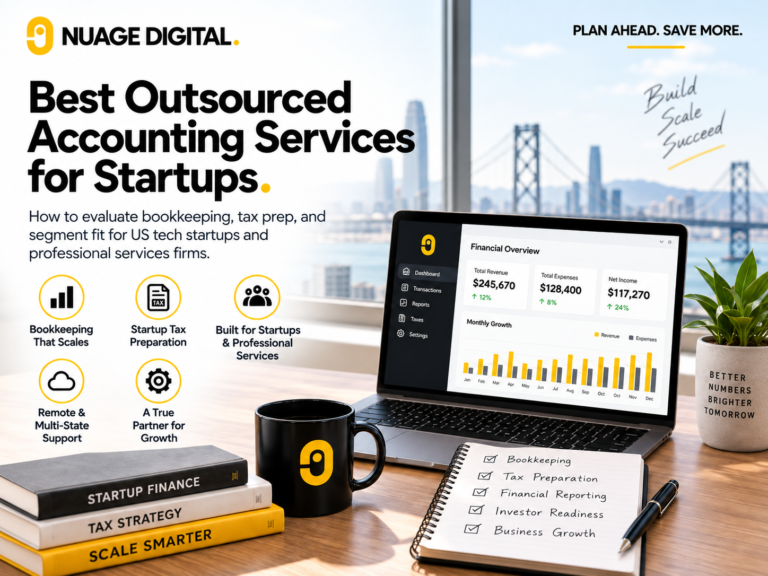
Tech startups and professional services firms both outsource their books, but for different reasons and with very different needs.
Read article

Sales tax, POS filing and payroll for restaurants.
Does your POS file your sales tax?Project profitability and revenue across long jobs.
Accounting for agenciesJob costing, retainage and subcontractor paperwork.
Payroll for contractors
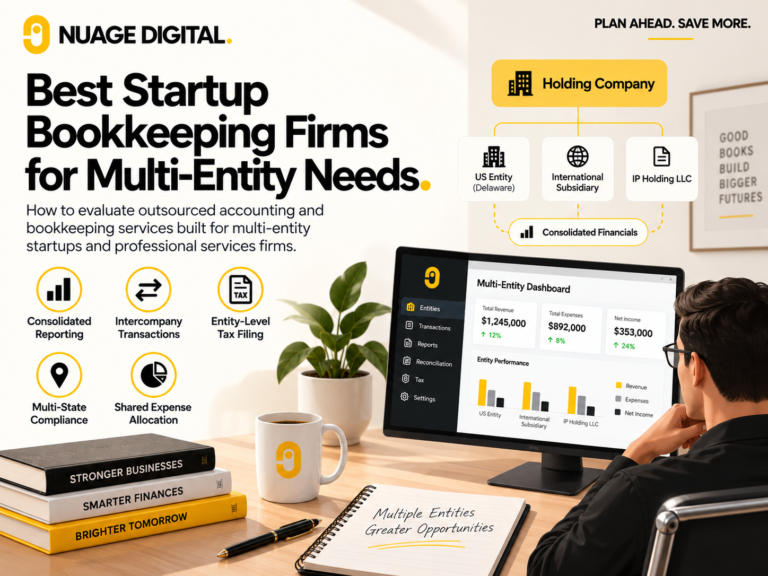
Structure, consolidation and investor-ready books.
Multi-entity bookkeepingIf you’ve read this far and still aren’t sure what applies to you, that’s what the call is for. Fifteen minutes, no pitch.